BioShock Infinite is a Narrative Disaster
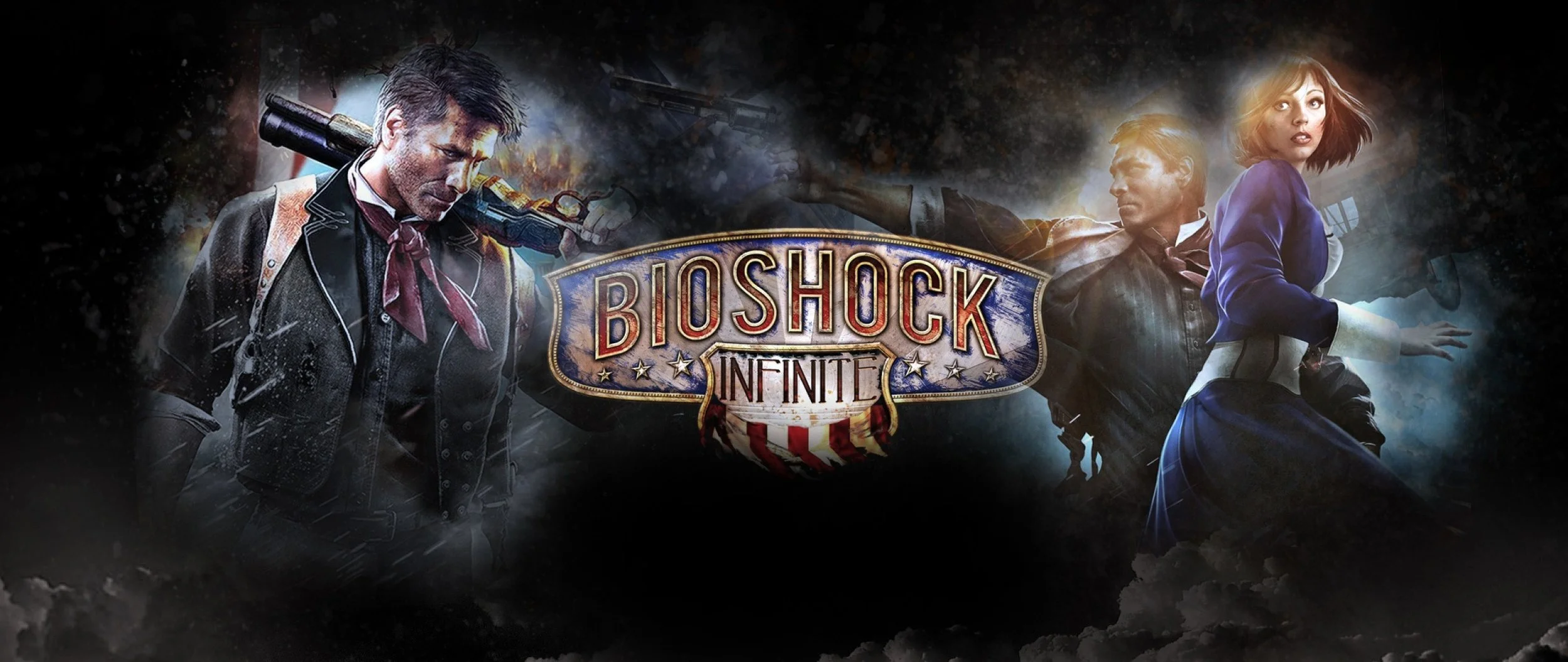
BioShock Infinite looks and sounds like a masterpiece. Columbia floats above the clouds in breathtaking glory, and the soundtrack pulses with period charm twisted into something uncanny. On release in 2013 it rode a wave of near-universal acclaim for its “mind-bending” story and emotional weight, and many people still treat questioning the story as a personality defect.
But look at it close enough, and the cracks are not just visible, they are structural. The game sold itself as a thoughtful exploration of choice, guilt, American exceptionalism, racism, religion, and determinism. What it delivered is a sky-high theme-park ride that gestures at big ideas, then abandons them for quantum hand-waving and a finale that raises more questions than it answers.
The narrative is not profound or ambitious in any coherent sense. It is a cluttered, pretentious mess that collapses under its own weight: riddled with abandoned themes, plot holes, shallow character logic, and a finale that functions as a desperate Hail Mary rather than a resolution. The game confuses complexity with depth, symbolism with argument, and a twist with a payoff. It tries to tell multiple incompatible stories at once and instead of integrating them, it abandons each one mid-stride. The result is something that feels deep while you’re inside it, but gets increasingly ridiculous the more you ask why any of it actually happened.
Thematically Abandoned
The opening hours are the best thing the game ever does. Columbia’s grotesque racism and religious zealotry are on full display in the raffle scene. The exploitation of the working class appears through the Vox Populi. And Booker’s personal demons from the Battle of Wounded Knee are established early. The game feels poised to say something substantial about power, extremism, cycles of violence, and American mythology.
Then it doesn’t.
Racism and religious zealotry peak early and fade into background noise and set dressing. Class struggle lasts until the writers need a plot pivot, at which point Fitzroy becomes a child-murdering cartoon so Elizabeth can kill her and the story can leave politics behind. American exceptionalism is announced by every statue but never explored, then gets sidelined the instant the multiverse machinery activates.
This is not ambitious overreaching. It is unfocused writing. A dozen concepts get thrown at the wall in the hope that art direction and Elizabeth’s tears will make them stick. They don’t. The result is a story that repeatedly yells “Look how deep I am!” while skimping on actual development.
The game is politically themed, not politically complex. People want to give the game credit for putting racism and nationalism on screen. But putting them on screen is not the same as thinking about them. Infinite is terrified of committing to any stance, so it retreats into quantum metaphysics where no argument can be pinned down. The multiverse does not deepen the themes; it lets the writers escape them.
The Vox Populi arc is the clearest example of political cowardice. What begins as a revolution with legitimate grievances against an authoritarian hierarchy, conveniently devolves into a “both sides are bad” exit ramp. Fitzroy’s turn isn’t dramatized radicalization. It’s character assassination in a single scene so the writers can stop talking about systems and start talking about tears in reality.
A former developer at Irrational Games eventually confirmed what the game itself had already demonstrated: the team got “really wrapped up” in the quantum mechanics, “to the detriment of the socio-political themes.” (via TechRadar)
Collapsing Characters
Booker DeWitt begins as a flawed, grounded protagonist: a violent man haunted by Wounded Knee, alcoholism, and debt. “Bring us the girl and wipe away the debt” is a clean, compelling premise, and the revelation that he is (or could have become) Zachary Hale Comstock is meant to be tragic. In practice, the Booker-is-Comstock reveal is emotionally loud and logically incompatible with the game’s own rules. Comstock is older, sterile from tear exposure, and ideologically transformed in ways baptism cannot explain. It’s a narrative fork that’s asked to do more work than a single ritual can bear. Accept the water and you become an aged, messianic white-supremacist prophet with a different voice, different memories, and a different politics. Refuse it and you remain a violent mercenary who will later slaughter his way through the same city.
The story needs them to be the same man and different men at the same time, plus Booker must die before he can become Comstock, plus Elizabeth exists because Comstock needed Booker’s daughter. The further the explanation goes, the more it becomes a pile of contrivances trying to resemble fate.
Elizabeth starts as the game’s greatest strength: curious, intelligent, funny, sheltered, and sympathetic. Her introduction in the tower is one of Infinite’s most effective sequences. Once she escapes, the narrative no longer knows what to do with her except upgrade her according to plot needs. First she’s sheltered, then horrified by violence, then a killer, then a reality-warper, then an omniscient tour guide who can suddenly lecture on constants and variables. Her tears are simultaneously a brilliant gameplay mechanic and a narrative crisis: if she can open rifts, why does Booker keep solving problems with a shotgun? Arbitrary limitations are imposed simply because unrestricted use of her powers would end the story. By the finale she is no longer a person, she is the exposition machine that makes the twist run.
Comstock could have been one of gaming’s great villains: a charismatic prophet of an authoritarian theocracy built on American exceptionalism, racial hierarchy, and weaponized religion. Instead he spends most of the game as a voice on a loudspeaker. We experience Columbia’s ideology through propaganda and statues far more than we experience the man. Once the twist arrives, the monster is nothing more than Booker with a different life choice. The mastermind becomes a metaphysical variation of the protagonist, which is thematically interesting in theory but dramatically weaker in practice.
As previously mentioned, Daisy Fitzroy receives the most blatant character assassination. The game wants to say that revolutions consume themselves and the oppressed inevitably become monsters without depicting any convincing radicalization. This is politically cowardly, narratively cheap, and thematically sabotaging.
The Lutece twins are charming, neutral observers who function as narrative duct tape. They manipulate universes, resurrect themselves, guide Booker, and explain (or refuse to explain) whatever the plot requires. They are omnipotent when convenient and powerless when the story needs tension. They patch holes with metaphysics rather than resolve them.
Columbia is a Theme Park, Not a World
Columbia is one of the most visually striking settings in gaming. The architecture, propaganda, religious mythology, and social texture give it a genuine identity. The worldbuilding, however, is hollow and does not hold up to scrutiny.
To be clear, the concept of a floating city itself is not the problem. It can easily be accepted as fantasy, but even fantasy still needs to make sense in-universe. Columbia may be a beautiful stage, but it is not a coherent society, even within its own world.
The game never explains why Columbia needed to float in the first place. A city of this scale would require immense resources, yet it is economically isolated. The Founders preach American self-reliance while running on Fink’s stolen ideas and Lutece technology. The Vox Populi go from under-equipped workers to a full-scale army overnight because a tear said so. Infrastructure, population, and economy never add up, until the plot needs chaos. The political and cultural worldbuilding is constantly interrupted by the supernatural plot.
Compare Rapture, where the contradictions were the story. The city sat on the ocean floor so it could stay hidden. Plasmids were the product of scientific experimentation run rampant. Objectivism plus plasmids plus isolation produced a specific kind of collapse, and the systems you used were that philosophy made playable. Columbia’s vigors, on the other hand, have no equivalent reason to exist and almost no in-world use. The city is trying to be a replica of Rapture without the premise or logic that made Rapture immersive.
Walking through Columbia is often more interesting than the narrative happening inside it. That is the tragedy. The game had a world that could have carried a compelling story. Instead it used that world as a stage for a multiverse puzzle.
Gameplay Is at War with the Story
BioShock Infinite is a linear story, which is fine. What it also does is sell the illusion of agency. The game insists that choices matter while demonstrating that they do not. The guards always interrupt the baseball throw. The coin always lands the same way. The bird-or-cage pendant is purely cosmetic. Outcomes are predetermined, yet the player is asked to contemplate the importance of choice. That is a far cry from deciding whether to rescue or harvest a Little Sister.
One of the original BioShock’s strengths was that gameplay reinforced the theme. In Infinite, the shooting galleries feel detached from the plot. Booker is supposedly on a redemption quest laced with guilt and moral complexity, yet the player spends most of the game mowing down waves of enemies in arenas that have no bearing on the narrative. The violence does not comment on Booker’s past or Columbia’s rot in any meaningful way; it simply is. The body count becomes gameplay while guilt remains backstory. The two rarely intersect.
Meanwhile Elizabeth, the person the entire plot is about recovering, is invincible, ignored by enemies, and cannot be lost. As if to prevent the game from becoming one giant escort mission, the developers effectively removed her from the equation. The most important character in the story is a non-entity in the activity that occupies most of the playtime.
The Multiverse Escape Hatch
The introduction of the multiverse is the game’s load-bearing failure. The “constants and variables” reveal is presented as a gut punch about fate, choice, and consequence. In practice it is a narrative cheat: a way for the writers to climb out of every corner they painted themselves into. Need a different history? Go to another universe. Need a character to know something they shouldn’t? They’re from another universe. Need the Vox plot to stop mattering? You were in the wrong universe. Need the ending to close an infinite set? Declare that some things are always constant.
Booker’s “redemption” consists of dying to prevent one possible future version of himself from existing, but if every universe has a Booker and a Comstock, drowning one Booker at one baptism cannot erase every Comstock. If the multiverse is truly infinite, Columbia is inevitable and the ending is meaningless. Infinite unwittingly took the grandfather paradox and made it the plot. If Booker dies before the baptism, Comstock never exists, Anna is never taken, Elizabeth is never made, and the Elizabeths who drown Booker never exist to drown him. Killing a version on another branch could work in isolation, but Infinite wants the drowning to collapse all the Comstock branches. That’s something the many-worlds theory does not do.
The twist functions as a Swiss Army knife: whenever something needs to have happened differently, another reality explains it. Alternate universes stop being an exploration of possibility and start serving as an excuse. The game says “quantum probability did it” the way a fantasy story says “a wizard did it.” The ending recontextualizes everything without making any of the preceding events more meaningful. It turns the game into an elaborate machine built to reach a predetermined conclusion, then asks the player to feel devastated by a sacrifice whose logic is based on rules that were rewritten in the last twenty minutes. Then throws out the word “Constants” in the hopes you won’t notice.
The frustrating part is that a simpler, stronger story was sitting right there: a damaged man and a sheltered young woman gradually become dependent on each other while confronting violence, trauma, and the fact that the past cannot be undone. Booker and Elizabeth were enough. Columbia was enough. A broken father figure trying to save a girl from a theocratic sky-nation, and discovering he has to face the worst parts of himself, was enough. That would’ve been a damn good game, but Infinite kept interrupting it with increasingly elaborate mythology until the characters were just cogs in a multiversal machine.
“You just don’t understand it”
The last refuge of Infinite’s defenders is not a reading of the story, but a verdict on the audience.
If you bounce off the ending, you weren’t paying attention. If you can follow the ending and still think it falls apart, you wanted a simpler game. If you wanted the political opening to go somewhere, you missed what the game was “really” about. The complaint is never allowed to be about the work; it is always about you.
It is an incredibly weak argument, and has done more to protect the game than any actual defense of the text. It’s a move that only sounds intelligent because the game trained people to make it. Infinite spends hours implying that confusion is the point: cryptic twins, unfinished sentences, symbols stacked on symbols, a finale that pauses to explain itself and still leaves people reaching for diagrams. Difficulty of assembly gets mistaken for depth. If a story requires homework, that homework can start to feel like evidence that the story was worth it.
There is a difference between a plot you have to reconstruct and a plot that cannot survive reconstruction. Yes, the baptism, the tears, the lighthouses, and the Anna/Elizabeth reveal can all be lined up. Plenty of people have done so and still found a machine that only works if you don’t lean on it. Understanding the intention does not obligate people to call the result good. Calling the story unfalsifiable only invites that critique.
The defense also depends on a useful confusion between two kinds of dislike. Some players lose the thread in the last hour and walk away annoyed. Some players can draw the timeline on a napkin and still think it’s a cheat. The second group is more threatening, so it often gets folded into the first. If every objection can be reclassified as a failure to “get it,” then no objection ever has to be answered on the merits.
Watch what happens when you do answer on the merits.
The politics were dropped.
Fitzroy was discarded so the plot could change subjects.
Comstock barely exists as a character until he is revealed to be another version of Booker.
Elizabeth’s power limits appear and vanish according to combat design and plot needs.
The player’s choices are cosmetic while the script lectures about choice.
None of those are solved by having a better understanding of quantum physics. Those are writing problems and calling them out is not a failure of comprehension.
A work can be confusing and still be strong. A work can be fully understood and still be weak. BioShock Infinite hides in the gap between those facts. The people who dislike it after understanding it are not the ones who missed the point, they are the ones who stayed long enough to find it. It is a story that wants the prestige of complexity without the burden of consistency. Understanding the plot is the beginning of the argument against it, not the end.
A Beautiful Wreck
The good parts are not imaginary. Elizabeth and Booker, before the machinery eats them. The first glimpse of Columbia. The sky-rails. The Luteces’ banter. The music. A handful of set pieces that still play. The feeling, in the opening hours, that you have arrived somewhere that hates you with a smile. Those things are real, and they are why the game can still feel like a masterpiece while you are inside it.
They are also load-bearing decorations on a foundation that cannot take weight. The story wants to be all things dramatic, thrilling, and thought-provoking, and it fully succeeds at none of them. It’s a beautiful, expensive movie trapped inside a repetitive combat loop, and a combat loop interrupted by a movie that won’t stop explaining itself.
Infinite arrived at a time when games were desperate to prove they could tell “important” stories. Gorgeous Unreal Engine visuals, excellent performances, memorable music, and an ending built for discussion produced enormous critical goodwill and a 94 Metacritic score. That combination did not just inflate the reception, it trained people to treat skepticism as a failure of literacy. Praise and time have since smoothed out its rough edges in collective memory. People remember the spectacle and the ache of the finale, not the half-baked themes, how many characters were used as hinges, or how much of the ending only functions if you don’t think about it. Once the nostalgia wears off, those structural weaknesses become obvious. The question shifts from “How did the writers come up with all of this?” to “Why did they need all of this?”
BioShock Infinite is not a narrative disaster because it is ambitious. It is a narrative disaster because its ambition consistently exceeds its ability to support its own ideas. It tries to be a political thriller, science-fiction mystery, character drama, philosophical meditation, story about racism, revolution, religious extremism, fatherhood, and redemption all at once. The result is a beautifully presented train wreck. An expensive-looking movie trapped inside a mediocre video game whose story, upon any rigorous examination, simply does not hold together.
Love the game if you love it. But let’s not pretend the narrative is an untouchable work of genius. The story didn’t need an infinite number of realities, it needed to pick one story and finish it.