The MCU Ranked
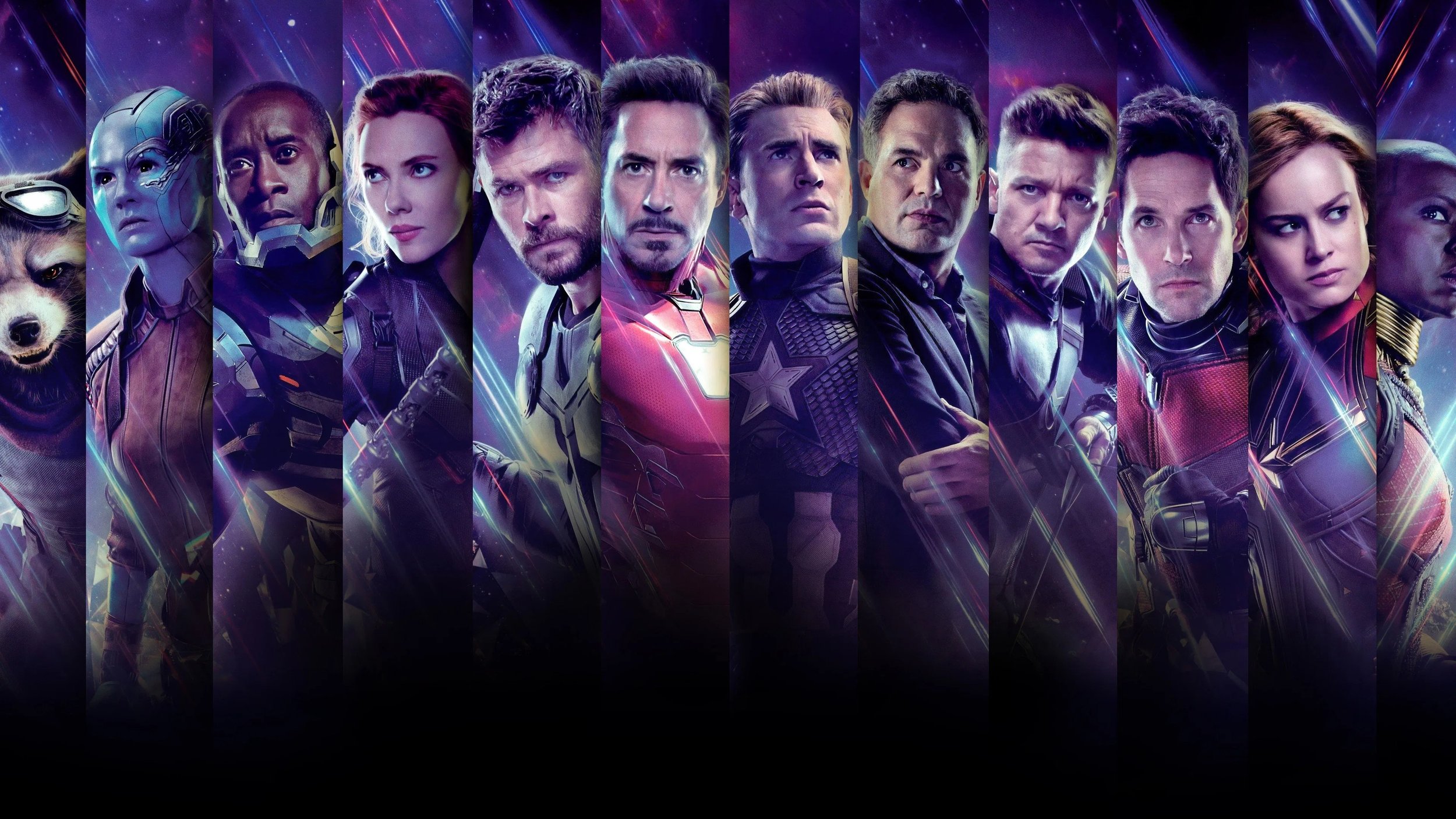
Ranking the Marvel Cinematic Universe is like organizing a very expensive junk drawer: there are a few genuine gems, a ton of clutter, and at least one thing you’re not entirely sure how it got there. It all started with one armored billionaire tinkering in a cave, and somehow it snowballed into a convoluted labyrinth of multiverses, gods, spies, witches, and at least one sentient raccoon.
This won’t be scientific, and it won’t be unbiased, but with Doomsday and Secret Wars looming on the horizon, and after years of multiverse overload, tonal whiplash, escalating power creep, more CGI sky beams than any one franchise legally needs, and movies that feel like they exist just to set up the next one, I’ve decided to throw my own ranking into the ring for the world to criticize. (Yes, that was a very long sentence, but I felt it earned.)
The only titles not included are various Fox productions such as Deadpool 1 & 2 and the X-Men films, Your Friendly Neighborhood Spider-Man, and X-Men ‘97, as these are not considered MCU canon (or at the very least, their status is ambiguous).
Other than that, we’re running the full gamut.
Whether produced by Marvel or retroactively canonized, this countdown includes every theatrical film, short, special presentation, and show across Disney+, Netflix, Hulu, ABC, and Freeform.
Prepare to disagree.
67. Ironheart (2025)
Ironheart is so aggressively tone-deaf, poorly conceived, and narratively broken that it actually redefines how bad things can get. From a thoroughly unlikable protagonist to a dangerous distortion of heroism, the series isn’t just bad, it’s a stain on the MCU.
Riri Williams is insufferable, arrogant, and self-obsessed. Instead of using her brilliance to help people or better the world, she’s single-minded in pursuing her own notoriety. She builds to impress and dominate, then complains endlessly that no one gives her enough credit. She has access to world-class labs, top-tier grant funding, and next-gen tech, then lectures the audience about oppression. She treats grand theft, academic fraud, missile strikes on police, and gang violence like they’re minor inconveniences. She’s a morally bankrupt protagonist who reflects every value parents teach their kids not to emulate.
The show weaponizes identity to deflect criticism and avoid accountability. And in doing so, perpetuates harmful ideas under the guise of progress.
66. Secret Invasion (2023)
Secret Invasion is a political thriller too afraid to actually tackle politics. It’s proof that the MCU has become a bloated, risk-averse corpse, parasitically feeding off decades of established lore while cowering from any genuine creative danger that might actually make a Disney+ show worth watching. What could have been a razor-sharp, claustrophobic suspense thriller, quietly unraveling a Skrull mole inside a high-security agency through paranoia, betrayal, and nail-biting deduction, was instead turned into laughably overblown, effects-heavy nonsense.
And then there’s the wasted potential of Maria Hill: after years of being underutilized as the ultimate competent sidekick, Marvel finally brings her into the spotlight, only to unceremoniously kill her off in the first episode. This show is a masterclass in squandered potential and corporate cowardice that leaves you wondering why anyone still bothers.
65. She-Hulk: Attorney at Law (2022)
It was bound to be garbage but it couldn’t even be fun garbage. It’s a smug, self-absorbed disaster that somehow manages to be both insufferably preachy and embarrassingly incompetent. Jennifer Walters is utterly detestable. A dismissive, self-obsessed, perpetually immature brat who wastes no time insulting and belittling Bruce Banner, mocking the decades of agony, isolation, and world-ending rage he’s endured, all while strutting around like her five-minute Hulk experience makes her the superior green goddess. It’s not character development; it’s narcissistic delusion dressed up as empowerment that alienates everyone watching.
The show doesn’t just fail at portraying capable women, it actively sabotages the idea by obsessing over turning every man into a cartoonish chauvinistic, narcissistic, sex-crazed moron, as if that’s the only way to make its “girlboss” protagonist look good. This lazy, man-hating caricature isn’t clever satire; it’s toxic resentment masquerading as feminism, and it drags down legacy characters like Banner in the process, proving Marvel has completely lost the ability to create new heroes without trashing the old ones.
Worst of all, the series reeks of contempt for its own audience, preemptively sneering at the “toxic” fans it knew would hate the garbage writing, low-rent CGI, and joyless lectures. It isn’t just bad, it actively hates you for expecting better.
64. Agatha All Along (2024)
Agatha All Along manages to alienate everyone by forgetting who its audience even is. The show presents itself as quirky, campy, witchy fun, seemingly aimed at “wine moms,” only to turn around and mock that exact demographic with lazy stereotypes and snide jabs, leaving no one feeling welcomed or entertained. And considering “wine moms” were never exactly flooding theaters for superhero content in the first place, building a show around that audience, then ridiculing them, is a baffling creative choice from the start.
63. The Marvels (2023)
The Marvels is a plotless mess that feels like it was assembled from leftover scraps of better ideas. There’s barely a coherent story, just a string of disconnected set pieces loosely tied together by a body-swapping gimmick that starts off mildly amusing but quickly overstays its welcome, turning into a forgotten afterthought because the writers had no clue how to meaningfully integrate it into the narrative. Then there’s the pointlessly idiotic musical number. A cringey, out-of-nowhere song-and-dance sequence that halts the film dead in its tracks and exposes just how desperate the production had become.
62. Echo (2024)
Echo is the perspective shift that was too afraid to innovate. Everybody and their mother was pointing out that it would’ve been infinitely stronger as a silent film, letting sign language and visual storytelling do the heavy lifting and putting us directly in Maya’s experience. Instead, it’s so terrified of truly committing to anything fresh or daring that it collapses into a timid, half-baked mess.
Worse, at its core, this series clearly exists purely as a DEI virtue-signaling exercise, intended to simply to check as many diversity boxes as possible in one fell swoop. Except they forgot the one that actually matters: basic quality.
61. Captain America: Brave New World (2025)
Given the amount of production issues this movie had, there’s no way it wasn’t going to be a disaster. It was rewritten, reshot, recut, and re-edited into oblivion. A bloated, tedious mess that somehow rivals its own budget in excess. Characters drift in and out without purpose, plot threads lead nowhere, and very little of it holds together in a meaningful way. Sam Wilson suffers from an identity crisis that’s never resolved. He’s presented as a patchwork of other heroes rather than a fully realized Captain America in his own right.
In addition to its self-contained problems, the movie insists on functioning as a sequel to a 17-year-old film many viewers never even considered part of the MCU, while also attempting to patch a plot hole from another entry most people forgot was part of the MCU.
60. Eternals (2021)
Eternals is a punishing slog and one of the MCU’s most egregious misfires. A long, boring, and relentlessly dreary epic that drags on for far too long while accomplishing next to nothing. The film is bloated with a way-too-big ensemble cast of entirely new characters, forcing the story into an aimless mess that feels like a two-and-a-half-hour exposition dump riddled with contradictions and half-baked mythology. Instead of crafting genuinely interesting personalities, the movie prioritizes diverse representation above all else, resulting in a lineup of characters who are more checklist items than compelling people, lacking depth, chemistry, or memorable arcs.
Additionally, the Eternals themselves are simply too powerful, with borderline no weaknesses, or at least none that are consistent; they only seem to get hurt or struggle when the plot arbitrarily demands it. There’s no real stakes, tension, or sense of peril. The whole thing is an overambitious miscalculation that mistakes scale and inclusivity for substance, leaving viewers exhausted, bored, and wondering why Marvel ever thought this was the direction worth pursuing.
59. Inhumans (2017)
Inhumans is clearly a show that was set up for failure from the start. That whole IMAX premiere gimmick (dropping the first two episodes in theaters like it was some epic blockbuster) raised expectations to a level the show could never possibly meet, which became painfully obvious when the rest was dumped into a Friday night TV slot. It was clear the budget went straight to the marketing hype instead of actual quality. The show looked cheap, felt rushed, and never lived up to its own premise. The acting is stiff, wooden, or straight-up amateurish, with many characters feeling either incredibly bland or wildly miscast.
What could’ve been a cool exploration of power, loyalty, and exile turned out to be a snooze-fest that feels like it’s actively trying not to entertain you, and perfectly exemplifies the decline of Marvel’s ABC TV era.
58. I Am Groot (2022–2023)
I Am Groot is Marvel brain rot. It’s nothing more than their version of TikTok videos, and one of the most forgettable, unnecessary, and pointless things the MCU ever released. These tiny shorts are completely empty: no story and no charm, just Baby Groot stumbling around doing mildly cute nonsense for a few minutes before vanishing into the void. It’s a waste of time, expectation, creation, money, and work all rolled into one brainless piece of junk. The only acceptable things are the solid CGI and the fact that kids under 6 might giggle.
57. Black Panther: Wakanda Forever (2022)
Black Panther: Wakanda Forever is a sequel that confuses themes for depth. It piles on length, speeches, and side plots, but without the tight storytelling that made the first film work. It’s a bloated, preachy, poorly structured movie that stumbles from grief to geopolitics to sequel setup, all while dealing with spotty CGI, awkward forced humor, and obvious franchise-building distractions.
Character-wise, it struggles even more. Shuri was never going to land as the new Black Panther. She works as a sharp, scene-stealing support character, but not the main protagonist. She lacks the depth to be intriguing, the presence and gravitas to be a leader, and the physicality to convincingly sell the action. Riri is just as insufferable as she would end up being in her own show, with jokes that are so ill-timed it’s almost disrespectful. Namor, meanwhile, is supposed to be a major threat but is too watered-down to be taken seriously as an antagonist. He’s not intimidating or compelling, has a convoluted backstory, and his motivations shift depending on what the plot needs.
The movie feels like it was made more out of obligation than a deliberate attempt to further the MCU. It’s more exhausting than it is epic.
56. Captain Marvel (2019)
Carol Danvers is written less like a character and more like a foregone conclusion. She is the very definition of a Mary Sue. She has no flaws, no meaningful weaknesses, no defining personality quirks, and no internal struggle to shape her journey. Her “arc,” if it can be called that, boils down to her realizing she was already incredible while everyone else was wrong.
But worst of all, the movie commits the cardinal sin of demystifying Nick Fury in the dumbest way imaginable. It reveals that he lost his eye not to some epic battle or shadowy conspiracy, but to a damn cat scratch, shattering years of built-up intrigue for the sake of a cheap gag.
55. Moon Knight (2022)
Moon Knight ends up in an awkward no-man’s-land where it doesn’t satisfy anyone: it’s not sharp enough or standalone enough to pull in viewers outside the MCU bubble, yet it’s so disconnected from the larger universe that MCU fans are left wondering why it even exists. For a show about dissociative identity, Egyptian gods, and the literal afterlife, it should be surreal, intense, and unforgettable, but instead it’s weirdly flat and hard to even describe what the point is. The creepy mythology and psychological angle sound cool on paper, yet they’re handled with so little flair that nothing really sticks. Like a lot of the Disney+ Marvel shows, it drifts into that CW-tier zone, stretching thin material across too many episodes. It tries to juggle big themes and trippy concepts but forgets the basics, like making the story clear, tense, or actually exciting, so it just ends up feeling long, boring, and kind of pointless.
54. The Falcon and the Winter Soldier (2021)
The Falcon and the Winter Soldier is the fight against terrorism that’s too afraid to be violent. Ironic, considering it’s a spinoff of Captain America: The Winter Soldier, one of the MCU’s grittiest and most hard-hitting entries, praised for how brutal it was. Instead of leaning into that same gritty action and character tension, the series bogs itself down in heavy-handed messaging, with the premise and central conflict shaped more around making a statement than telling a compelling story. When the themes overshadow the storytelling and the action pulls its punches, what you’re left with is neither bold nor thrilling, just preachy and toothless.
You’ve got to do better, Marvel.
53. Iron Fist (2017–2018)
Iron Fist is easily the weakest entry in the Netflix lineup, and it’s not hard to see why. Danny Rand is written as a moody, aimless lead who spends more time sulking than inspiring, with motivations that are flimsy at best, and he doesn’t have the charisma or depth to make any of it interesting. For a show built around a martial arts hero, the fight scenes are surprisingly underwhelming, especially compared to the slick brutality of Daredevil or the grit of Jessica Jones. Season 1 drags with sluggish pacing and the lore is extremely underdeveloped.
Season 2 is better, mostly because it tightens things up and leans more on the supporting cast, but by that point the show had already burned a lot of goodwill. Colleen Wing is easily the standout; she’s more layered, more grounded, and honestly just more interesting than Danny ever manages to be, but the show never fully capitalizes on her potential. The tease of her taking on the Iron Fist mantle felt like the course correction the show needed, but the cancellation killed any chance of seeing that pay off. There are hints of a stronger series buried in there somewhere, but unless you’re doing a completionist run through the Netflix shows, skip it.
52. Doctor Strange in the Multiverse of Madness (2022)
Doctor Strange in the Multiverse of Madness feels less like a story and more like a bunch of ideas slammed together, held in place by a script that’s messy, inconsistent, and constantly tripping over the MCU’s bigger continuity chaos. The movie keeps slamming the brakes so characters can explain rules, backstory, or how the multiverse works, yet it still runs on plot holes, contrived logic, and magic rules that change whenever it’s convenient. It somehow manages to be over-explained and make no sense at the same time. The whole thing feels structurally all over the place, like the set pieces came first and the story was duct-taped around them.
The characters don’t fare much better. Strange, who used to be sharp and calculating, is suddenly gullible and reckless, making dumb decisions just to keep the plot moving. Wanda’s motivations are treated like tragic depth, but her obsession with kids who never existed is thin and poorly justified, especially considering where we last left her. And America Chavez barely counts as a character, she’s basically just a walking portal gun with no personality. Instead of being mind-bending or emotional, we get a movie that’s loud with nothing to say and formulaic with no direction.
51. Shang-Chi and the Legend of the Ten Rings (2021)
Shang-Chi and the Legend of the Ten Rings starts strong but ends up feeling like four different movies fighting for control. One minute it’s a grounded family drama, then a crime-thriller backstory, then a jokey road trip, then suddenly a full-blown fantasy epic, and none of them fully mesh. There are some genuinely great fight scenes and slick choreography early on, but they’re stuck inside a fragmented narrative that’s stuffed with forced jokes and characters who are never properly developed.
Awkwafina’s character doesn’t help matters, constantly undercutting tension with quips that feel more grating than funny, adding tonal whiplash to a movie that already can’t decide what it wants to be. What really stings is that the film had the bones of something tighter and cooler: a more intimate, character-driven kung fu story. But, in typical MCU fashion, quality takes a back seat to sky beams, magic creatures, and a noisy CGI slurry of a final battle. By the end, the grounded martial arts identity that made the first half stand out gets buried under spectacle, leaving a carcass of wasted potential.
50. Eyes of Wakanda (2025)
Eyes of Wakanda is a show that exists and I’m not entirely sure why. On paper, the idea sounds like it could be cool, but in practice, the series ends up boring, pointless, and poorly conceived. It never really dives into what makes Wakanda meaningful beyond “cool tech and cool outfits.” The historical settings feel like superficial backdrops, the tech and timeline logic are nonsensical, and the whole thing plays out like a kid’s show desperately trying to appeal to adults but forgot to bring any actual maturity.
The animation looks nice enough, smooth, colorful, and stylish in that Marvel Animation way, but it can’t save a story that has no momentum. It’s pure content filler that wastes a potentially fascinating premise on shallow vignettes that go nowhere.
49. The Defenders (2017)
The Defenders is a fun but flawed ensemble piece that never quite lives up to the massive hype it built up as the big Netflix crossover event. The team-up between Daredevil, Jessica Jones, Luke Cage, and Iron Fist should have been electric, but the rushed plotting and uneven character integration make it feel more like a setup for future seasons than a standalone story. It’s basically Daredevil Season 2.5 with some extra guests rather than its own bold team-up adventure. It focuses way too much on Iron Fist, who’s easily the least compelling of the four, while sidelining the sharper personalities of Jessica and Luke. And the fight scenes and pacing are surprisingly underwhelming for something billed as a street-level Avengers.
48. Marvel One-Shots (2011–2014)
I’m ranking the Marvel One-Shots as a single entry for the same reason they’re landing this low on the list: they’re just too short. Each one runs only a few minutes, and even combined they clock in at just under an hour. They’re far too brief to justify standing on their own alongside full-length features and series with actual breathing room.
However, they are extremely well done. They’re tight, clever little expansions of the MCU that add flavor without overstaying their welcome. The Agent Carter short in particular stands out as the best of the bunch, with sharp writing, strong action, and a reminder of how effortlessly compelling that character is. If nothing else, the One-Shots are a reminder that even in bite-sized form, there was a time when Marvel could deliver something genuinely fun and well-crafted.
Had this been a limited series rather than a staggered collection of disconnected shorts, it would’ve ranked much higher.
47. Ant-Man and the Wasp: Quantumania (2023)
Quantumania is the perfect storm of everything wrong with the modern MCU: it’s boring, generic, poorly written, visually ugly, and painfully unfunny. The script just meanders from one contrivance to the next, dumping exposition instead of building setups or payoffs, all while firing off cringe‑heavy jokes that never land. Visually, it’s a murky, plasticky mess, like someone fed a thousand sci‑fi clichés into a blender and hit purée. The whole thing has a predictable, corporatized vibe, as if it were assembled by committee while creativity was politely escorted out of the building. And now that Marvel has quietly and timidly backed away from the character of Kang, the film retroactively plays like a dead‑end, making the whole thing feel pointless in hindsight.
Speaking of characters, everyone sucks. Ant‑Man feels like a side character forced into a lead role he can’t carry. The Wasp is barely present despite being in the title. Cassie gets rewritten into an abrasive, implausible genius purely because the plot needs her to be one. MODOK has a bit of an arc, but his design overshadows every aspect of who he is, and should have been given a heavy dose of the Sonic treatment. Even the Quantum Realm, which should’ve been a surreal, reality‑bending environment, ends up looking like a generic alien planet with a fresh coat of CGI paint. There’s no sense of weirdness, no imaginative physics, and no visual identity.
46. Thor: Love and Thunder (2022)
Taika Waititi’s signature eccentricity is on full display, too much so. His offbeat humor, which some people somehow find charming, is unbearable. With what seems like complete creative freedom, he leans so heavily into self-aware absurdity that the film barely resembles the Thor we once knew.
This is where the MCU became an overexaggerated parody of itself. The movie treats even its most serious moments with a wink and a punchline, undercutting any emotional weight, and borders on being disrespectful to its own mythology.
45. Cloak & Dagger (2018–2019)
Cloak & Dagger sits pretty comfortably in the MCU’s mid to low tier. It has flashes of real style, especially with its moody cinematography and grounded, emotional tone. The chemistry between the two leads is strong, and when the show focuses on their connection and personal struggles, it can feel like a younger, more introspective cousin to the Netflix series’.
The problem is that it never quite finds its footing. The pacing drags with long stretches of repetitive character beats with the plot barely moving forward. Season 2 gets even more abstract, making the story feel like it’s wandering without a clear direction. There’s potential and moments of genuine depth, but uneven writing, sluggish pacing, and heavy-handed social themes keep it from becoming more than just an interesting experiment.
44. The Punisher (2017–2019)
The Punisher leans hard into what you expect from the character, and for the most part, it works. The action is brutal and uncompromising, and the show does not shy away from the physical and emotional fallout of violence. Jon Bernthal absolutely carries it as Frank Castle. He plays him with raw emotion, bottled-up rage, and a kind of exhausted grief that makes the character feel more tragic than just trigger-happy. And when the series focuses on Frank’s trauma and the psychological scars of war, it becomes a genuinely strong character study instead of just a revenge fantasy.
That said, it can feel like it pushes the violence past the point of necessity, like it’s constantly trying to outdo itself. Both seasons also struggle with pacing. Storylines stretch longer than they need to, and the momentum stalls in places where it should be tightened. At its best, it is intense, grounded, and character-driven. At its worst, it feels like it is spinning its wheels between bursts of chaos.
43. What If…? (2021–2024)
While the animation stayed smooth, stylish, and visually appealing throughout, the writing degraded with every season. Season 1 is easily the strongest, with several genuinely memorable episodes. Season 2 is where things started getting boring, disconnected, and overly focused on Captain Carter. Then Season 3 was a major drop in quality with childish writing, weak plots, and overpowered characters.
The show leaned way too hard into Captain Carter as the go-to hero, basically turning it into “The Peggy Carter Show” and crowding out what would’ve been far more interesting characters and scenarios. On top of that, the “What If” premises got increasingly random, trivial, or straight-up disconnected from actual MCU moments. I think a better use of the show would’ve been to explore alternate takes on the major decisions from the films.
42. Daredevil: Born Again (2025)
Daredevil: Born Again is a frustrating, tonally all-over-the-place mess that’s a victim of its own production chaos. Originally planned as a reboot, Marvel eventually realized what they had wasn’t working and that the new series needed the groundwork laid by the original Netflix show to carry any real weight. So they brought in new writers and did extensive reshoots; however, they refused to scrap six months of already-shot footage, forcing the team to awkwardly build a new story around old material, and the seams are very noticeable. From characters to cinematography, tone to pacing, the entire show is a clear step down from the Netflix run and is the result of Marvel playing it too safe at first, then scrambling to course-correct midstream.
41. Hawkeye (2021)
Yet another massive missed opportunity. What should’ve been a gritty, character-driven dive into Clint Barton’s darkest chapter is instead turned into a lighthearted, Christmas-themed buddy comedy that feels more like a kid’s show than anything else. Hawkeye would’ve been way better if it had taken place post-Snap, between Infinity War and Endgame, leaning hard into Clint’s Ronin phase and focusing on his trauma, rage, and blood-soaked vigilante spiral. Instead, the show seems way more interested in introducing Kate Bishop and Maya Lopez as the next big things while awkwardly continuing Marvel’s attempts to keep Yelena relevant.
But Kate Bishop is the real problem here: she’s a textbook Mary Sue. She’s young, rich, and the best at everything. She was unbeatable in karate as a kid, a state-level fencer, can pick locks like a pro, does parkour, takes full-force punches from men twice her size and pops right back up, and is somehow better at archery than Hawkeye himself. Whatever happened to having a character arc?
40. Ms. Marvel (2022)
Ms. Marvel plays like a bargain-bin CW teen drama awkwardly shoehorned into the MCU, complete with cheesy effects, forced teen angst, and a complete lack of polish. The story is a messy, hectic jumble that can’t stay focused on any single plot thread, while failing to explain key elements, and expecting the audience to just nod and accept whatever’s happening without question or logic. The writers made a huge mistake by overcomplicating the story instead of keeping it humble: a simple, small-scale tale about family bonds, self-discovery, and navigating teenage life in Jersey City would have played to the character’s strengths far better than this directionless mess.
39. Wonder Man (2026)
Wonder Man exists, but why? It lands squarely in that zone where nothing is outright terrible, but nothing sticks with you either. It’s not bad, just completely forgettable. It’s the kind of show you watch, tell yourself “meh,” and immediately struggle to remember. It doesn’t suck, but it’s definitely not going to convince anyone to subscribe to Disney+, and it might be the least impactful MCU title to date. Nothing in it feels like it matters now, or feels like it’ll matter later. It’s fine, harmless even, but in a franchise built on big swings and interconnected payoffs, Wonder Man is the definition of skippable.
38. Luke Cage (2016–2018)
Luke Cage starts off strong, especially in its first season. It really leans into themes of racism, power, corruption, and what it means to protect a community like Harlem without turning it into a generic superhero backdrop. The setting feels alive, the music is on point, and the show takes its time exploring culture and identity. Mahershala Ali’s Cottonmouth is easily one of the highlights. He brings a layered, almost tragic presence to the role that makes him way more compelling than your standard crime boss.
Season 2, though, feels less focused. The plot gets muddled, too much time is spent circling around side characters, making it lose a lot of the momentum from the first season. Then there’s the ending, which has Luke taking over Harlem’s Paradise and hinting that he might be slipping toward the very corruption he fought against. It’s a bold move, but without a follow-up season to explore that shift, it feels more frustrating than satisfying.
37. Thunderbolts* (2024)
Thunderbolts is one of those MCU entries that had potential on paper but collapses the moment it hits the screen. The movie gestures at heavy themes of trauma, depression, and self‑worth, but never actually commits to exploring any of them. Every time it gets close to saying something meaningful, the moment gets smothered by formulaic Marvel humor or a reference to some Disney+ show half the audience didn’t watch. Add in repetitive action scenes that feel copy‑pasted from other projects, and the whole thing starts to resemble a checklist rather than a story. Characters don’t grow so much as reset, thanks to the franchise’s ongoing habit of writers undoing each other’s arcs.
What really drags it down though is how blatantly it feels like filler, a bottom‑of‑the‑barrel project designed to simply keep the MCU machine running until the next true mainline entry. The narrative is rushed, payoffs feel unearned, and the humor lands in all the wrong places. Instead of a bold team‑up movie that was no doubt supposed to be Marvel’s version of The Suicide Quad, we get a stitched‑together product that highlights the MCU’s most persistent modern flaws: tonal inconsistency, out‑of‑place jokes, and a creative direction that seems increasingly lost.
36. Jessica Jones (2015–2019)
A lot of Jessica Jones works because it doesn’t pull its punches when it comes to trauma, abuse, and recovery. Krysten Ritter delivers a killer performance as Jessica: a super-powered private investigator who’s abrasive, sarcastic, and deeply broken, but never feels like a caricature. It dives into PTSD, addiction, control, and the long-term effects of abuse in a way that can be honest and uncomfortable at times, but never feels cheap or exploitative.
The noir tone works perfectly, with dark, moody visuals and a constant sense of dread, but Jessica’s dry, biting humor keeps it from becoming overwhelming. At its best, it barely feels like a traditional superhero show. It’s more of a psychological drama that just happens to exist in a world with powers, and that grounded, messy humanity is what makes it stand out.
35. Ant-Man and the Wasp (2018)
Ant-Man and the Wasp is a great MCU palate-cleanser; it’s a light, breezy, low-stakes adventure that deliberately avoids another universe-ending apocalypse, and honestly, that’s exactly what the franchise needed. But it leans pretty hard into goofy comedy to where it stops feeling like a real superhero story at times. The humor is broad, slapstick, repetitive, and forced in ways that feel like they’re trying too hard instead of being clever or character-driven.
The shrinking tech remains super delightful though. The visual gags are inventive, the action gets creative with size-shifting chaos (the toy-car chase and the portable lab stuff are ridiculous but fun), and I’m happy to suspend disbelief for the sheer entertainment value.
The biggest issue is there’s no clear antagonist: Sonny Burch is too silly to be threatening, Jimmy Woo and the FBI are more of a bureaucratic nuisance, and Ghost is the only one with any character depth or real stakes, but she’s not even framed as a true villain. It ends up being a film that’s entertaining in bursts but lacks any real tension, depth, or payoff to reward you for going along with the silliness. It’s a fun, forgettable hangout movie; perfect for a chill rewatch when you want something easy, but it doesn’t leave much of an impression beyond “that was cute.”
34. Black Widow (2021)
Black Widow’s various appearances throughout the MCU may have started the softening process, but it’s her solo film that really hammers home just how much her edges have been dulled. Rather than embracing the darker, grittier roots that once made the character so compelling, Marvel has leaned so far into the family-friendly version they’ve created that her past as a cold-blooded assassin has largely faded into the background.
In terms of the movie itself: I did enjoy the majority of the action, despite the spotty CGI. Its biggest issues are that it should have been made much sooner, prior to Endgame, Taskmaster is very underused, and at times it feels like Natasha is being sidelined in her own film.
33. Loki (2021–2023)
Loki is a frustrating mess that feels like Marvel completely forgot who the character actually is. Canon has established Loki as one of the most powerful, intelligent, and magically gifted beings in the entire MCU; a trickster god, master manipulator, and capable of insane feats of sorcery. But the show treats him like a confused intern who barely remembers he has magic, gets his ass handed to him in weak, underwhelming fight scenes, and spends most of his time stumbling around looking lost instead of being the cunning force of nature we know him to be. He’s barely even the main character in his own show. Sylvie often feels more central, and the story keeps sidelining him for exposition dumps and TVA bureaucracy. But worst of all is how it shatters MCU lore: the TVA can just jump through time and prune anything, which retroactively makes every significant event in the movies irrelevant. Why care about stakes or consequences when a bunch of time cops can just hit a reset button?
32. Thor: Ragnarok (2017)
Thor: Ragnarok might be a crowd-pleaser for some, but for me it’s where the MCU started prioritizing memes over storytelling. It’s the point where Taika Waititi really takes the wheel and the Thor series jumps the shark. This is our first real taste of his juvenile, nonstop joke machine where every single scene is overloaded with childish, forced humor that never lets up, turning what could’ve been a grand cosmic epic into a slapstick parody. You basically can’t take the movie seriously if you want to enjoy it; the second you try to engage with any drama, it yanks you right out. Thor gets reduced to a goofy caricature of his former self, and Waititi’s self-insert Korg is just there to deliver annoying one-liners and remind you this is all a big, silly joke.
31. WandaVision (2021)
WandaVision only ranks this high because of how well it started. The first three episodes were genuinely inventive and highly entertaining. They felt like the show might’ve been on the verge of sparking a renewed interest in 1950s-style black-and-white sitcoms, but with a modern polish… and then the rest of the show happened. Oh, what could have been.
30. Runaways (2017–2019)
Runaways caught me off guard. I went in expecting typical teen drama with some superhero elements tossed in, and maybe a little CW cheese, but was delivered something way more moody and cinematic than I expected. The kids actually feel like real people. They start as familiar archetypes, but they grow on you fast. Gert’s sharp wit, Chase’s hidden sensitivity, or Karolina’s slow-burn rebellion against her creepy megachurch family all give the show some real personality. The tone is also surprisingly well balanced. It knows when to be funny, when to lean into the mystery, and when to slow down for emotional beats without getting preachy.
Sure, there are a couple of gripes. The changes to Molly take away some of that chaotic fun she has in the comics, and the show takes its sweet time before the actual “running away” part happens. But those feel like minor issues compared to what works. It looks great, has killer music, and the villain group is one of the more interesting ones to show up in a Marvel series. For something that could have been generic, it ends up being way more compelling than it has any right to be.
29. Thor: The Dark World (2013)
Thor: The Dark World is a decent but noticeably weaker follow-up to the first Thor. It’s got some cool stuff going for it, like the expanded look at Asgard, bigger cosmic stakes, and some polished CGI, but it never quite recaptures the charm and balance of the original. Tom Hiddleston once again steals the show as Loki, while Malekith is a completely forgettable villain. The film feels like a prime example of how the superhero genre can rake in billions yet stay creatively stagnant. It’s generic, predictable, and disappointingly safe, with action that’s mostly bloodless, uninspired cinematography, and nothing that really grabs you. In the end, the whole thing just feels like disposable spectacle.
28. Iron Man 3 (2013)
Iron Man 3 might be clever, bold, and character-driven, but it’s also a narrative mess and in some ways, even a betrayal of the comics. The obvious positive is how it explores Tony’s PTSD after The Avengers. To an extent, it’s more of a Tony Stark movie than an Iron Man movie. Overall, it has a very inconsistent tone: a dark and intense beginning turns into a comedic middle, then an explosive finale. The Mandarin twist is just stupid. It takes an iconic, menacing villain and turns him into a dumb joke, completely undermining the threat. Tony “fixing” himself at the end and blowing up all the suits feels contradictory after he spent two films building an army of them. It’s like they wanted to wrap up his arc but ignored everything that came before. Iron Man wasn’t just an alter ego, it’s who Tony was and gave him a newfound purpose in life. “I am Iron Man.”
27. Werewolf by Night (2022)
Werewolf by Night is a stylish, atmospheric little gem that feels like a loving homage to classic monster cinema. The direction leans hard into moody lighting, creature-feature scares, and a genuinely fun, old-school werewolf hunt that’s way more entertaining than you’d expect from a one-off special. The whole thing has a confident, unapologetic pulp-horror swagger that makes it stand out in the MCU lineup. Although, I’m not entirely sure how it fits into the broader MCU (it feels like they just took a Marvel comic, made a cool adaptation, and decided “yeah, this is canon now”).
Its biggest drawbacks are the brevity and the limited narrative ambition. It’s a simple, self-contained monster movie that doesn’t try to reinvent the wheel or tie into some massive multiverse saga. But that simplicity is exactly what makes it so refreshing; no forced cameos, no heavy lore dumps, just a tight, bloody good time.
26. Iron Man 2 (2010)
Iron Man 2 is one of those MCU sequels that feels like it’s trying to do way too much at once, and it ends up a bit of a mess with Robert Downey Jr. being the glue holding it all together. His charisma is amazing as usual; Tony Stark’s snark, vulnerability, and swagger carry nearly every scene. The action is reliably entertaining with nothing mind-blowing or spectacular, but the fights and set pieces are fun enough to keep you engaged. The problem is the story: it’s disjointed and overloaded with subplots. You’ve got Tony’s health crisis with the arc reactor poisoning, Ivan Vanko’s revenge plot, Justin Hammer’s bumbling villainy, Black Widow’s introduction, and a ton of S.H.I.E.L.D. setup for the bigger MCU picture. It all feels scattered, like the movie is more interested in laying the groundwork for future films than telling a cohesive story right here and now.
25. Spider-Man: Far From Home (2019)
Spider-Man: Far From Home is a pretty solid MCU entry that strikes a nice balance between comedy and action. It’s got some fun teenage awkwardness mixed with some genuinely spectacular set pieces. The action sequences are easily the best part with the choreography and scale feeling fresh and exciting, and it’s easy to get swept up in the spectacle. Tom Holland’s Peter remains endearing as he tries to live up to Iron Man’s shadow while juggling high-school drama and a European vacation gone wrong. Zendaya’s MJ is much more likable this time around, as she gets better material and a sweeter, more natural dynamic with Peter.
That said, the movie has some real weak spots. Mysterio comes off as extremely corny with his big villain reveal and those exposition dumps feeling awkward and over-the-top. The whole plot leans way too hard into Iron Man’s legacy, making it feel forced and like Peter’s story is still playing second fiddle to Tony’s ghost. Then of course there’s Marvel’s annoying trend of continuously underutilizing Maria Hill; she shows up for a couple scenes and then vanishes again like she’s just there to fill quota. It’s not a bad film by any means but it’s held back by a weak, legacy-tied story and a villain who never quite clicks.
24. Black Panther (2018)
Black Panther is good but it’s been hyped and overrated to the moon and back. Michael B. Jordan’s Killmonger is easily the film’s true dramatic core; he’s complex, charismatic, deeply wounded, and genuinely compelling ideologically. The rest of the movie has its moments, but many of the action scenes (especially the final fight) are poorly rendered, feeling weightless and video‑game‑like.
Critics and award shows showered it with praise for its cultural significance and representation, rather than on cinematic merit. This culminated in an Oscar win that was nothing more than virtue-signaling. Strip away the hype and it’s a good (not great) superhero film that gets treated like an untouchable masterpiece way more than it deserves.
23. The Fantastic 4: First Steps (2025)
It met what seems to be the new standard for superhero movies: it doesn’t suck.
Had Fantastic Four dropped during the Infinity Saga glory days, it probably would’ve been considered mid-tier, enjoyable but forgettable. But coming out when it did, it was able to benefit from how detached it was from the bloated, continuity-heavy mess the MCU has become. A standalone story set in its own universe and timeline, with characters that aren’t weighed down by years of backstory and fan service, gave it the freedom and freshness the MCU needed.
22. Daredevil (2015–2018)
Daredevil rides high off the strength of Season 1, and is the absolute pinnacle of the Netflix Marvel series. It’s gritty, focused, and refreshingly street-level in a way the rest of the MCU rarely touches. Charlie Cox absolutely owns the role of Matt Murdock, playing him with just the right mix of vulnerability and stubborn intensity so you actually buy that this blind lawyer could go toe-to-toe with the worst of Hell’s Kitchen. The depiction of heroism and moral ambiguity hits hard, as Matt constantly wrestles with how far he’s willing to go. Add in the brutal, grounded fight scenes and genuinely high stakes, and it’s hard not to get hooked.
21. Agent Carter (2015–2016)
Agent Carter is the most underrated gem in the entire MCU television lineup, and it got canceled way too soon after just two seasons. Hayley Atwell is absolutely phenomenal as Peggy Carter: she’s charismatic, effortlessly commanding, and she makes Peggy a strong, capable, witty heroine navigating 1940s sexism while outsmarting everyone around her. This is, of course, back when Hollywood knew how to approach feminism without being heavy-handed or preachy. The character development is strong, the direction is stylish, and it has great attention to period detail; it feels like a high-budget movie disguised as a TV series. The show nails that retro spycraft vibe of fedoras, vintage cars, old-school gadgets, and sharp, snappy dialogue that feels straight out of a classic noir film. It’s a rare blend of earnest heroism, pulpy period adventure, and light, stylish espionage that’s just a joy to watch.
20. The Incredible Hulk (2008)
Solid but unremarkable. In the grand scheme of the MCU, it’s one of those early entries that feels like it’s just there, and for the longest time, a lot of people didn’t even count it as part of the official MCU canon. It’s definitely an improvement over Ang Lee’s 2003 Hulk movie, it’s way more enjoyable, more straightforward, and packed with actual action that doesn’t get bogged down in weird dream sequences or over-the-top artsy stuff.
The film’s place in the MCU has faded hard over the years with Norton’s recasting, key characters disappearing, and the overall tonal shift of the MCU making the grittiness feel out of place. It’s not bad by any means, it’s just forgettable in a library full of bigger, bolder films.
19. The Guardians of the Galaxy Holiday Special (2022)
It’s basically the MCU’s version of a Hallmark movie: a silly, low-stakes holiday sidequest. It’s ridiculous, goofy, and clearly aimed at kids, but it’s a total blast if you’re already a fan of the Guardians’ lighter side. It’s not trying to move the big MCU plot forward at all, it’s completely non-essential, and that’s actually part of the charm. It’s just giving us a pleasant, festive little detour full of heart, dumb jokes, and holiday cheer. The writing is pretty meh but the cast chemistry is still electric, everyone’s having a great time, and that infectious festive spirit carries it way farther than it probably should.
18. Agents of S.H.I.E.L.D. (2013–2020)
Agents of S.H.I.E.L.D. is definitely one of the better things to come out of the MCU’s television side, and it started as a great way to run a side story that quietly paralleled the movies without stepping on their toes. Early seasons especially nailed the grounded spy-thriller vibe: covert ops, shady government conspiracies, cool gadgets, and a team dynamic that felt fresh and fun. The smartest thing it did was stay completely hands-off with the movie lore. The big film events rippled into the show and forced real consequences, but the show never tried to ripple back and change anything in the films. An argument can be made that this limited the show’s access to major characters and forced it to invent workarounds, but it was honestly a blessing in disguise: that one-way street kept the MCU timeline clean and meant you didn’t need to binge seven seasons of television just to understand the next Avengers movie.
However, one thing I always thought was a missed opportunity was not bringing in Nick Fury, even if just in a limited “man in the shadows” role. It would’ve given the team a clearer narrative hierarchy and made them feel like legitimate S.H.I.E.L.D. agents instead of a semi-rogue squad operating on their own. Still, the show delivered a ton of solid character work, some genuinely great twists, and years of entertainment without ever breaking the larger MCU sandbox.
17. Guardians of the Galaxy Vol. 2 (2017)
Guardians of the Galaxy Vol. 2 has got that same wild, colorful energy that made the first one such a blast, and it still feels like a step up from a lot of what Marvel was putting out around that time. The visuals are vibrant and super imaginative, the soundtrack is perfectly curated, and the cast chemistry is off the charts.
That said, it’s not without its problems: the humor gets overplayed way too often, the plot is very thin and predictable, and the villains range from underdeveloped to straight-up weak. The execution isn’t quite as tight or confident as the first film; it’s messier, louder, and sometimes a little too indulgent with the jokes and side tangents. But honestly, the heart, the performances, and the sheer entertainment value carry it well above the MCU’s middle tier. It’s a flawed but lovable sequel that remains a good time every time.
16. Doctor Strange (2016)
Doctor Strange is definitely one of the more stylish MCU films, as the kaleidoscopic, reality‑bending magic scenes are its standout feature. Benedict Cumberbatch turned out to be a great casting, helping give Strange a distinct characterization right out the gate as a brilliant but arrogant neurosurgeon who’s so full of himself it’s almost charming. And when the accident happens, his bitterness and desperation feel grounded in actual pain rather than just being a jerk for jerk’s sake; you understand why he lashes out. The film’s biggest problem is the inclusion of Dormammu. Dropping Strange’s ultimate villain into the first movie feels premature. He’s supposed to be this massive, world-ending threat, but using him here makes him feel more like a one-off boss fight than the looming dread he could’ve been.
15. Ant-Man (2015)
Ant-Man is a fun, light-hearted, visually inventive heist movie that feels like a breath of fresh air in the MCU, especially after all the world-ending stakes of the bigger films. Paul Rudd is perfect as Scott Lang: effortlessly likable, charismatic, and just the right amount of awkward charm that makes you root for him from the jump. The shrinking effects are creative and playful, and look cool while also serving the heist vibe without feeling overdone. Yeah, the villain is pretty generic and underdeveloped, and you can definitely sense the script got stitched together after Edgar Wright left. But honestly, none of that kills the vibe. Ant-Man’s easygoing energy, clever visual imagination, and just-plain-fun spirit make it the perfect movie to enjoy on a lazy afternoon and even easier to throw on again when you want something light and entertaining without any heavy lifting.
14. Spider-Man: Homecoming (2017)
Spider‑Man: Homecoming delivers a lively and refreshingly small‑scale take on Peter Parker’s world. It’s got an energetic high‑school setting, a relatable coming‑of‑age tone, and is committed to showing Peter actually learning how to be a hero. But it’s flawed in ways that keep the film from greatness: the tech‑heavy suit feels un‑Spider‑Man‑like, the action is lighter and less intense than Raimi’s films, and several supporting characters seem weak or miscast. Zendaya’s MJ in particular is borderline insufferable; she’s irritating, unnecessary, and a poor fit for the character’s legacy. Yet despite these flaws, it’s an undeniably enjoyable chapter in Spider‑Man’s cinematic history.
13. Thor (2011)
Thor pulls off a surprisingly strong adaptation by balancing fun, drama, and Norse mythology without ever feeling like it’s trying too hard. You get the epic Asgardian family drama mixed with fish-out-of-water humor on Earth that actually lands most of the time. The story’s pretty predictable, sure, but it’s clear, engaging, and never gets bogged down by unnecessarily overcomplicating itself. It keeps things entertaining by bouncing between the lighter, quirky Earth scenes and the grand, colorful Asgardian spectacle, which gives it a nice rhythm that still holds up.
12. Avengers: Age of Ultron (2015)
I personally think Age of Ultron is one of the most underrated and underappreciated movies in the MCU. It gives every single Avenger real, meaningful development that feels true to their character and the wider MCU storyline. Tony and Steve’s ideological rift starts cracking open here, Thor wrestles with his own innocence versus growing militancy, Hawkeye finally gets a proper expanded role with a family and some heart, Black Widow shows real emotional depth and vulnerability, and Hulk’s inner conflict gets a heavy spotlight. The afterparty scene in particular, when the team tries (and fails) to lift Thor’s hammer, is a perfect showcase of Whedon’s snappy writing and character chemistry.
And then you’ve got the great introductions of Quicksilver, Scarlet Witch, and Vision. But James Spader’s Ultron is obviously the standout, he’s commanding, bitter, eerily calm, and genuinely terrifying in a way that makes him one of the best villains in the MCU. And the set pieces are explosive and wildly imaginative; the Hulk vs. Hulkbuster fight and the soaring city battle in Sokovia still hold up today. Sure, it’s not perfect, but Age of Ultron delivers great character work and some of the most memorable large-scale action in the franchise.
11. Captain America: The First Avenger (2011)
Captain America: The First Avenger is one of the most charming and heartfelt entries in the MCU. It’s a faithful, old-school origin story that nails Steve Rogers right from the start: he’s a skinny, scrappy kid from Brooklyn who gets knocked down over and over but never backs down because his heroism comes straight from his heart, not some super-serum shortcut. The movie drives home the core idea that the man makes the hero, not the powers. Steve’s values of courage, loyalty, and doing the right thing even when it’s hard stay exactly the same before and after he becomes Captain America, and that consistency makes him feel real and inspiring in a way a lot of superhero origin stories don’t bother with.
Best of all, because this was one of the first MCU entries, the movie stands perfectly on its own. If you dropped someone into it with zero MCU knowledge, they’d still get a complete, satisfying WWII-era adventure packed with heart, action, and stakes. There’s no reliance on the rest of the franchise to work, which makes it feel timeless in a way later MCU stuff doesn’t. It’s just a damn good movie, plain and simple.
10. Avengers: Endgame (2019)
Avengers: Endgame is the kind of massive, emotional payoff that makes you feel like every minute of the previous 10+ years was worth it. It’s a monumental, fan-rewarding, visually spectacular finale that delivers everything longtime MCU fans hoped for: from Cap lifting Mjolnir to Tony’s heartbreaking snap. And honestly, it’s where the MCU should’ve ended. It serves as a perfect finale to the Infinity Saga, with no post-credits tease pushing the next phase forward. Multiple characters get powerful, well-earned sendoffs, and the movie lets you sit with real closure instead of rushing to the next thing. Even years later, Endgame remains the last true cinematic event where literally everybody was talking about it. Marvel may never top this level of hype, buildup, and satisfying payoff again.
9. Spider-Man: No Way Home (2021)
This isn’t just a parade of cameos for cheap pops, it’s nostalgia and fan service done right. The movie pulls together the strongest pieces from Spider-Man’s entire live-action history and honors the character’s whole cinematic legacy with real respect. The fan service actually serves the story instead of hijacking it. Bringing back Tobey and Andrew isn’t just a “hey, look who we found” moment; it’s meaningful, packed with genuine beats of mentorship, redemption, and brotherhood that hit you right in the feels. And the villains get the same level of care: Willem Dafoe’s unhinged energy is terrifying and perfect as Green Goblin, Alfred Molina brings back Doc Ock with all the tragic gravitas he deserves, and Jamie Foxx’s Electro gets a much-needed overhaul that finally makes him feel dangerous and compelling.
8. Guardians of the Galaxy Vol. 3 (2023)
It’s essentially a Rocket Racoon movie. His backstory is the emotional core, diving deep into his traumatic origins under the High Evolutionary in a way that adds an unexpected darkness that’s atypical of the MCU.
A problem is that by the time this film came out, the MCU was already flooded with comedic space adventures, so it didn’t feel quite as fresh or groundbreaking as the original Guardians, but it still managed to stand out in the crowded mediocrity the MCU had become. There’s also some noticeable tonal whiplash, as serious moments are constantly being undercut by the stereotypical Marvel humor. But these flaws don’t derail it, the film still delivers a stylish and emotional sendoff for the team we’ve loved for years.
7. Deadpool & Wolverine (2024)
Yes, the plot is this thin and it leans heavily on nostalgia, but it is undeniably fun and wildly entertaining. And it didn’t just toss in cheap, one-off references; it genuinely paid tribute to the old-school superhero movies many of us grew up with, skillfully weaving them into the story. No, it did not save the MCU, but it gave the MCU the lifeline it needed to try and crawl itself back.
6. Guardians of the Galaxy (2014)
This might be the most fun movie in the MCU. It’s James Gunn before he was let out of his cage. At its core, the story is just a bunch of quirky misfits chasing a MacGuffin across the galaxy, but it’s still a legit space adventure that’s packed with heart, laughs, and actual stakes. The movie hits the sweet spot where the humor feels sharp without being smug, the emotions land without being forced, and it has the confidence to entertain without dumbing anything down. It’s entertaining without being mindless.
5. Captain America: Civil War (2016)
Civil War nailed what made the MCU great: big ideas, huge action, and characters you actually care about clashing in ways that matter. The central conflict is so well done because both sides actually make sense: Tony’s pushing for oversight after all the collateral damage they’ve caused, while Steve’s fighting to keep the Avengers free to act when governments can’t be trusted. You’re genuinely torn watching it, because neither Cap nor Iron Man is the “bad guy,” they’re both right in their own way. The movie doesn’t shy away from the fallout either; when superheroes fight, people die, and it treats those consequences seriously instead of brushing them off with a quip.
Even with a massive cast, it never feels bloated or confusing. The big multi-hero brawl at the airport is legendary: clear, thrilling, and packed with personality without ever losing track of who’s doing what. Plus, it serves as a great introduction for Black Panther and Spider-Man, both get killer debut moments that make you excited for their solo films without stealing the spotlight from the main event.
4. The Avengers (2012)
Joss Whedon successfully unites six major heroes into a cohesive, believable team, with his trademark strengths shining through in the witty banter, sharp character dynamics, and strong pacing. The script masterfully balances humor, high-stakes action, and genuine character development, while also giving every hero their own spotlight moment. Whether it’s Cap’s leadership, Hulk’s “smash” rampage, or Thor’s thunderous entrances, no one feels shortchanged.
Even by today’s standards the effects still hold up as top-tier, the action sequences remain thrilling and inventive, and the whole thing ties together years of careful buildup from the Phase One films into an extremely satisfying payoff. It proves a massive ensemble blockbuster can be smart, entertaining, and emotional all at once.
3. Iron Man (2008)
Iron Man is an exceptional origin story because it masterfully transforms Tony Stark from a self-absorbed, villainous arms dealer into a relatable hero through a gripping redemption arc that feels genuinely earned and deeply human. Tony’s brutal capture and torture by terrorists using his own weapons forces him to confront his destructive legacy. And it’s in that cave, alongside his mentor Yinsen, who urges him not to waste his life, that the first act alone packs an insane amount of character growth. His arrogance is redirected into ingenuity without ever making him feel annoying or superior.
The film also avoids overwhelming exposition by weaving Tony’s genius into plot-advancing moments rather than creating scenes just to showcase it. Every demonstration of his intellect, whether it’s building the arc reactor under duress or iterating on the suit designs, they serve the story and feel organic, keeping the pace tight and the character arc compelling from start to finish.
2. Captain America: The Winter Soldier (2014)
Captain America: The Winter Soldier is easily the best solo MCU film. It takes a classic good-guy hero and throws him into a super tense, paranoid political thriller where literally no one can be trusted, and the danger feels real and inescapable. That vibe makes every scene electric, especially the great action set pieces, which blend brutal, claustrophobic fights (like the iconic elevator scene) with large-scale destruction (like the explosive finale).
With the first movie having already done the heavy lifting to establish Steve’s character, this one puts his morals and values to the ultimate test. It forces him to grapple with isolation, betrayal, and sticking to his principles in a messy world, while still delivering those heartfelt moments that hit hard. The story excels at advancing the bigger MCU while working perfectly as a standalone, nailing that ideal mix of thrilling action and smart themes.
1. Avengers: Infinity War (2018)
Avengers: Infinity War is the absolute pinnacle of the MCU, a monumental achievement that masterfully weaves together dozens of characters from over a decade of buildup into one coherent, emotionally devastating story. It respects every ounce of established lore, continuity, and character development: no cheap retcons, no shortcuts, just a sprawling cosmic conflict that feels genuinely earned and inevitable. Thanos emerges as one of the most nuanced antagonists in superhero history; a fully realized villain whose warped philosophy of love, sacrifice, and balance forces the heroes into impossible, heartbreaking choices. The writing masterfully balances laugh-out-loud humor, jaw-dropping spectacle, intense drama, and crushing stakes, culminating in the rare and bold decision to let the villain win.
The power of its third act is simply unmatched: from the parallel battles on Titan and Wakanda, to Thor’s thunderous dramatic entrance, to the final Snap. In a sequence that truly leaves a mark, Peter Parker’s death is particularly devastating, as his Spider-Sense makes him horrifyingly aware of what’s happening as he fades away. The film honors its characters, giving every major player meaningful moments while delivering great action. But above all, it respects its audience and their decade-long investment.