Chicago’s $1.15 Billion Mistake
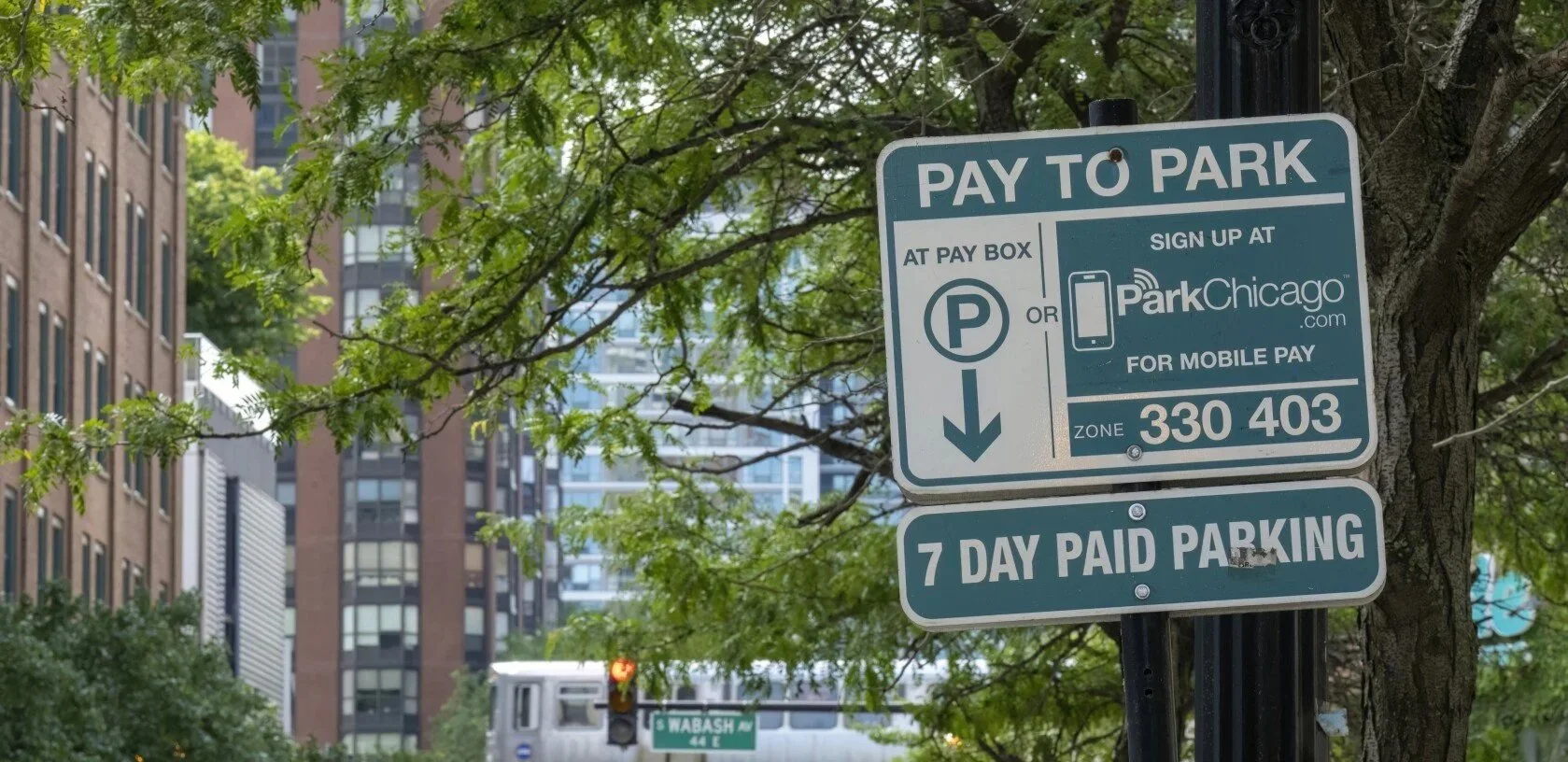
On December 4, 2008, in the throes of the global financial crisis, the City of Chicago, under then-Mayor Richard M. Daley, agreed to sign a 75-year lease with Chicago Parking Meters LLC (CPM), granting it control over roughly 36,000 on-street parking meter spaces in exchange for a one-time payment of $1.15 billion.
The agreement was announced on December 2, 2008, and approved by the City Council in a 40–5 vote just two days later.
On paper, the deal looked simple: an immediate cash infusion in exchange for the right to collect decades of parking fees. In practice, however, the deal functioned like selling the family silver for the equivalent of pocket change. The city quickly burned through the upfront payment in about two years, while private investors secured a predictable revenue stream for decades and, in the 17 years since, have already doubled their money.
But even beyond the money, the impact of the deal makes it clear that the city gave away far more than it received in return. Chicago didn’t just sell its parking meters, it sold its future.
Red Flags
Right from the start, there were two major red flags that were largely ignored: the deal was extremely rushed and received very little scrutiny.
As mentioned, the deal moved extraordinarily quickly. The Daley administration floated the proposal and secured City Council approval in just a matter of days, drastically reducing the opportunity for serious negotiation or independent valuation. There was no broad public-value analysis and no long-term revenue forecasting adjusted for inflation or rising demand. Had such a valuation been performed, the city would have realized it was receiving far less than the meters’ true long-term value.
Released on June 2, 2009, an analysis by the Chicago Inspector General estimated the city’s parking meters had been undervalued by roughly $974 million, a difference of 46%.
Chicago hastily and thoughtlessly gave up a permanent revenue stream for a one-time payment worth roughly half its actual value. If the flaws of the deal were not immediately obvious, they became impossible to ignore once it collided with reality.
Undervalued
Before the sale, the roughly 36,000-meter system generated about $22.9 million in total operating revenue in 2007, with net income around $18.9 million. Just a few years later, under private control, CPM was pulling in far more by aggressively increasing parking fees in an effort to recoup its investment as quickly as possible.
Since the deal, hourly parking rates have climbed from roughly $3.00 in 2008, to $6.50 in 2013, to around $7.00 in 2023.
By 2012-2013, the system was bringing in close to $140-$150 million annually. In 2022 alone, meter revenue totaled $140.4 million. By that point, even after pandemic-related disruptions, audit reports showed CPM had recovered its original investment plus an additional $500 million, with more than 60 years still remaining on the lease.
The Cost of Progress
The parking meter saga is an archetype of a broader privatization pitfall: short-term political expediency outweighing long-term public value. Many analysts have labeled the sale “one of the worst privatization deals in U.S. history.”
Once the meters were privatized, any attempt by the city to repurpose curb space (for bike lanes, bus lanes, pedestrian zones, green infrastructure, or other public-interest projects) came with costly per-space penalties.
Additionally, the city has been required to pay investors millions of dollars each year in reimbursements whenever meters are taken offline for construction, festivals, or other disruptions. By 2020, Chicago had reportedly paid nearly $78.8 million in such reimbursements.
(If the Bears, Bulls, Cubs, or White Sox ever win a championship, the parade might not be worth it.)
The meter system effectively became a privatized toll booth on everyday urban governance, one the city had to keep feeding just to make basic improvements. This has had a lasting negative effect on development, making progress more expensive and limiting Chicago’s ability to evolve to meet the needs of its residents. Recurring needs require a sustainable revenue source.
Adding to the lack of foresight, Chicago and its residents never truly saw the benefits of the one-time lump sum from 2008. The money was used to plug immediate budget holes rather than invested in lasting infrastructure upgrades, transit projects, or long-term neighborhood improvements.
Generational Loss
One of the most under-discussed failures of the Chicago parking meter deal isn’t just the price, it’s the length. A 75-year concession might sound abstract on paper, but in practical governance terms, it’s effectively permanent.
To put that timeline in perspective, a 75-year lease signed in 2008 won’t expire until 2083. That means every mayor, city council, transportation commissioner, and urban planner working today, and for decades to come, is forced to operate within the constraints of a decision made during the George W. Bush administration. A time before smartphones, ride-sharing, climate-driven street redesigns, or modern micromobility were a part of everyday life.
Cities simply do not evolve on 75-year planning cycles. A shorter or staggered concession would have allowed Chicago to revisit terms as circumstances changed: correcting mistakes before they became generational losses, reassessing asset value as technology and land use evolved, and renegotiating terms to align with new public priorities.
A 10-, 20-, or even 30-year concession still carries risk, but it preserves the most important tool a city has: the ability to learn and adapt. By locking itself into a 75-year agreement, Chicago surrendered the ability to respond to a future it couldn’t predict.
In the short time since the deal, cities across the country have reimagined curb space as a scarce public resource. Bus rapid transit lanes, protected bike lanes, outdoor dining, and delivery zones have exploded. Climate policy has pushed cities to discourage car usage altogether. And, most notably, ride-hailing services (such as Uber) and the rise in working remotely have drastically changed the demand for parking.
When Chicago agreed to the lease, it didn’t just sell parking meters, it sold future flexibility, future revenue optionality, future policy alignment, and future leaders’ ability to choose differently.
This is why the length of the lease matters as much as the undervaluation. Even if the city had received a better price in 2008, the inability to revisit the deal as the world changed would still have been a profound mistake. Good governance assumes uncertainty. The Chicago parking meter deal assumed the opposite, that the future would resemble the past closely enough to justify binding generations of residents to a single financial model. That assumption has already been proven wrong.
Renegotiation
By 2013, just five years into the 75-year lease, the parking meter deal had become politically radioactive. Meter rates had doubled, paid hours had expanded, and the city was hemorrhaging money every time it attempted to remove or alter curbside parking for public projects.
As outlined earlier, the lease requires Chicago to compensate CPM for any lost revenue whenever a meter is taken out of service. This includes meters removed for bike lanes, bus lanes, street festivals, construction, or basic infrastructure upgrades. In effect, the city signed a contract that penalized itself for governing.
In 2013, the Rahm Emanuel administration renegotiated portions of the agreement in an attempt to stop the bleeding. The revisions focused on reducing the city’s compensation payments tied to parking spaces taken out of service.
Supporters argued the renegotiation could “save taxpayers” up to $1 billion over the remaining life of the deal, especially if the city could optimize how many spaces were taken out of service each year. What is often left out, however, is what Chicago gave up in exchange: an additional 176 parking pay boxes, each covering roughly half a block or more, amounting to several hundred new metered spaces.
City leaders framed the renegotiation as a win: proof that the administration was “protecting taxpayers” and “fixing past mistakes.” In reality, it was damage control, not a reversal. The renegotiation did not restore public ownership, shorten the lease, or eliminate investor guarantees. It merely reduced the penalties the city had to pay for trying to function like a city.
The renegotiation stands as a quiet admission that Chicago gave away too much, too fast, for too little. And instead of being able to reset or exit the deal, the city was forced to beg for minor adjustments within a framework it could no longer control.
A Civic Failure
What might have felt like a lifeline for Chicago in an economic crisis instead became a generational transfer of wealth; from city residents and public services to private investors. Selling public infrastructure for quick cash may help plug a short-term budget gap, but it undermines long-term capacity for growth, flexibility, and public benefit, locking cities into decisions made in a very different era.
Perhaps most tellingly is that the lease had to be renegotiated only five years in. Yet these partial fixes didn’t change the fundamental calculus: Chicago still traded away a predictable revenue stream and long-term policy control for a one-time infusion that was largely absorbed by recurring budget commitments.
Viewed today, the 2008 parking meter lease stands out as one of the worst asset-disposal decisions in modern urban history. A cautionary tale of how a rushed, consultant-driven deal, with limited public input and no published long-term modeling, is almost guaranteed to underdeliver in hindsight.