Mixtape, Where’s My Game?
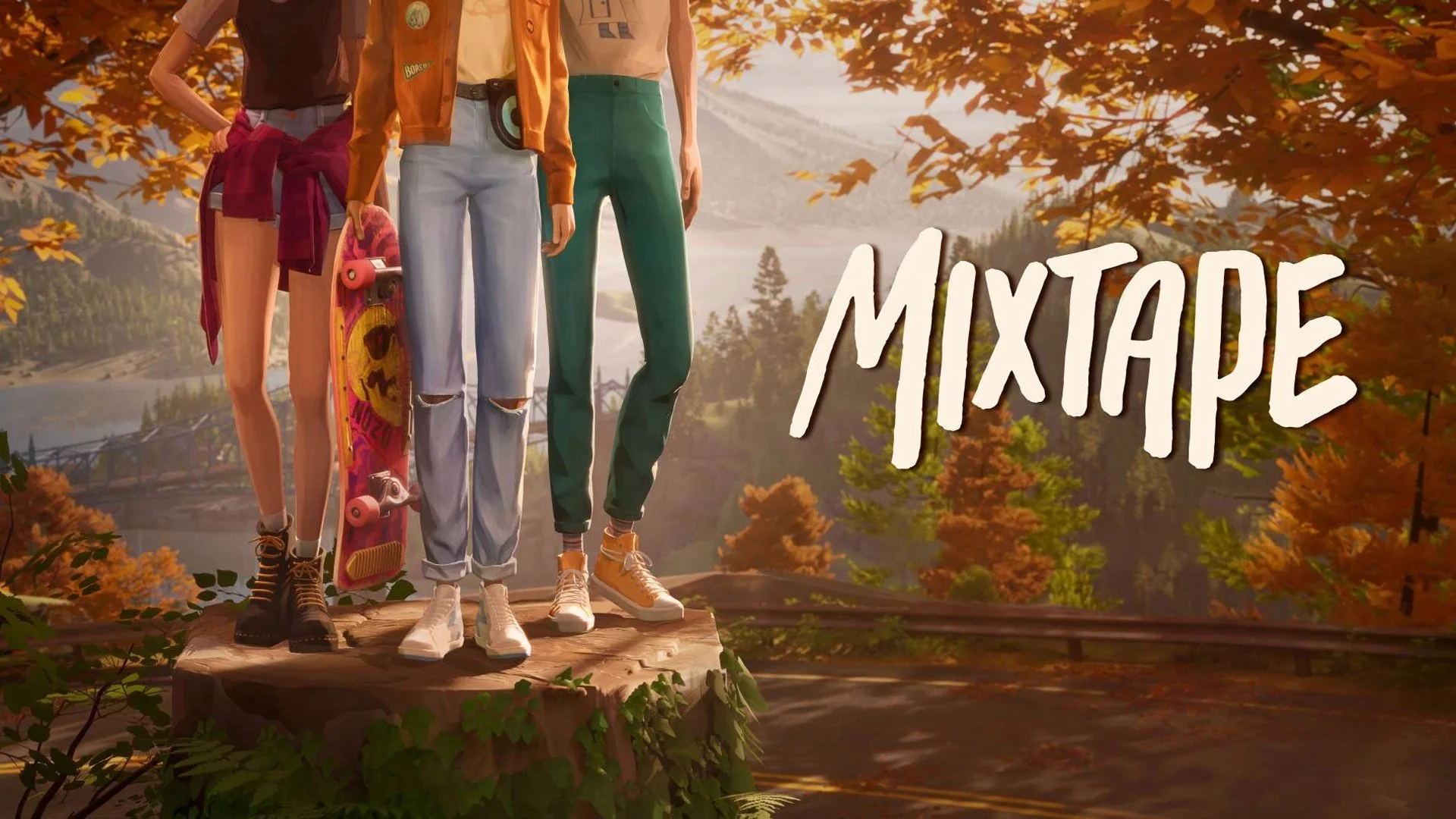
There was a time when video games were expected to involve actual play. Players were meant to fail, improve, experiment, and shape outcomes through skill or decision-making. That expectation now feels strangely controversial in parts of the modern gaming industry, where developers seem embarrassed by the idea of actually making a game. Every year we get another title that strips away interaction, removes challenge, and reduces player agency in favor of “cinematic storytelling.” Mixtape may be the purest example of that trend yet. Developed by Beethoven & Dinosaur and published by Annapurna Interactive, Mixtape barely qualifies as a video game. It is an expensive, stylized interactive movie that demands almost nothing from the player, yet somehow earned glowing reviews and perfect scores from critics who seem increasingly disconnected from actual gaming.
Mixtape follows three teenage friends spending one final night together before life pulls them apart. Set against heavy 1990s nostalgia and a strong licensed soundtrack featuring artists like Devo, The Smashing Pumpkins, and Joy Division, it presents a series of dreamlike reenactments of formative memories. On paper, this sounds like a heartfelt coming-of-age story. In practice, it raises serious questions about what even qualifies as a video game in 2026.
There’s No Game In My Game
You control Stacey Rockford and her friends as they skate, party, make out, and reminisce. The experience lasts around three hours and leans heavily on stylized visuals, musical vignettes, and narrative beats. But even with all its distracting presentation, the most noticeable aspect of the game is its astonishing lack of actual gameplay.
In fact, you barely need to touch the controller at all. The entire experience can reportedly be completed with as few as 150 total button presses, which sounds absurd until you see it in action. There are long stretches where you can simply put the controller down and the game will continue to play out, automatically guiding the characters in the right direction, traversing obstacles, and progressing forward without requiring any meaningful input from the player. The game will quite literally play itself.
This is not thoughtful design. It’s laziness dressed up as artistic minimalism.
This minimal interaction highlights a broader trend in narrative-focused titles, but Mixtape takes it to an extreme. It is essentially an interactive movie with occasional prompts that trick the player into thinking they’re participating. It couldn’t even bother to incorporate legitimate quick-time events despite countless moments throughout the game that offered easy and obvious opportunities for player interaction, or even consequences for failing the few interactions it does provide. Instead, everything flows forward no matter what you do.
Many sequences underscore this missed potential.
Early on, there is a secret handshake sequence that could be used to establish chemistry and impact the friendship dynamic going forward. In a more interactive game, messing it up could create awkwardness or maybe your friends tease you later. Succeed and perhaps it strengthens relationships or unlocks new dialogue options. Instead, it is an unfailable sequence that allows you to press buttons in any order you want. Why even ask for input at that point?
The same pattern appears during the car jam session. Choosing not to partake could have altered how your friends interact with you afterward. Maybe they think you’re distant. Maybe someone calls you out for not engaging. Instead, nothing matters.
When Stacey runs onto the football field and kicks the ball, the moment practically begs for actual gameplay mechanics. A simple Madden-style power and accuracy meter could determine whether she makes the kick. NPCs on the field could react accordingly. Past decisions affecting Stacey’s confidence could change how fast or slow the meter moves. Success or failure could have impacted confidence, mood, or future conversations. Instead the entire sequence is nothing more than a cutscene.
There are countless more examples, but the point remains: Mixtape avoids consequences almost aggressively. These moments play out with little to no player input or failure states. Every aspect of this “game” seems designed to avoid being a game. It wants the appearance of interaction without any risk that actual choices might disrupt its carefully scripted narrative.
The issue is not that Mixtape focuses on story. Plenty of narrative-driven games still deliver meaningful interaction. Titles like Life Is Strange or The Walking Dead built emotional investment through player choice, consequence, and tension. Even when those games simplified mechanics, they still understood that the player needed to matter. The problem with Mixtape is that it consistently refuses to let the player meaningfully affect anything.
The result is a product that feels less like interactive storytelling and more like a movie nervously pretending to be a game. You could watch a YouTube longplay and miss nothing. This is not a bold evolution of the medium. It is a retreat from what makes games unique: agency, risk of failure, experimentation, and genuine participation.
I’ve Seen This Before
Even the much-hyped visual style feels hollow and derivative, reflecting a broader issue of imitation over substance.
The reduced character framerate is clearly an attempt to appear artistic, imitating the visual style popularized by Spider-Man: Into the Spider-Verse. But what made that movie’s animation style effective was that it actually served the story. Miles Morales moved at a lower framerate to reflect his inexperience, while Peter Parker moved smoothly because he already mastered his abilities. The animation itself communicated character growth.
In Mixtape, the reduced framerate serves no narrative function whatsoever. It exists purely because the style became trendy, serving only as a reminder of how quickly the industry copies surface-level aesthetics without understanding why they worked in the first place.
Controlling the Narrative
All of that alone would make Mixtape divisive, but the conversation surrounding the game became even more explosive because of the critical reception. Gaming journalists handed it near-universal praise, with several outlets awarding perfect scores and hailing it as a groundbreaking artistic masterpiece.
This praise has turned Mixtape into a flashpoint, highlighting the growing disconnect between critics and audiences. A divide that is no longer just about taste, but about priorities. Many players still judge games primarily through mechanics, agency, replayability, challenge, and meaningful interaction. Meanwhile, large portions of gaming media increasingly evaluate titles based on presentation, emotional tone, cultural messaging, and ideological alignment.
Gaming journalists are seemingly hellbent on reminding people that they are not gamers, but political activists more interested in using their platforms to push narrative experiences that align with their beliefs while ignoring core gameplay. That’s how something like Mixtape gets elevated into a “must-support indie darling” despite barely functioning as an actual video game.
And even the “indie” label feels dishonest.
The project has been marketed as a scrappy artistic underdog deserving of support. In reality, it was funded through Annapurna Interactive, founded by Megan Ellison, daughter of Larry Ellison, one of the wealthiest people on Earth and co-founder of Oracle. That does not suddenly make the developers untalented, but it absolutely changes the narrative being sold around the game. This is not a grassroots passion project. It is a prestige narrative experience backed by enormous financial resources while still benefiting from the cultural credibility associated with indie development. A contradiction that mirrors the game itself.
A Symbol of the Era
Everything about Mixtape feels designed to project artistic importance while avoiding the harder responsibilities of game design. The soundtrack is nostalgic. The visuals are stylish. The dialogue aims for emotional authenticity. But underneath all its glowing reviews, cinematic presentation, curated nostalgia, and artistic posturing, Mixtape is remarkably hollow. It is not an evolution of gaming, but a rejection of what made gaming unique in the first place.
The industry increasingly celebrates games for resembling films, but games became culturally significant precisely because they offered something films could not: participation. A movie can tell you a story. A game lets you shape one. Mixtape, meanwhile, seems uninterested in that distinction.
Years from now, Mixtape will likely be remembered as a symbol of everything wrong with the gaming industry in this era: the triumph of cinematic pretension over actual game design, the growing divide between critics and players, and how massive financial backing gets rebranded as independent spirit.
While the game has a decent soundtrack and some nostalgic charm, that is simply not enough. When a product requires so little effort that it essentially plays itself, it stops being a game. The fact that it received universal acclaim only proves how broken the current system of coverage and development has become, and reveals deeper frustrations about authenticity, review standards, and what the medium should prioritize. Players deserve better than expensive movies with light button prompts. Until developers and critics stop rewarding this approach, titles like Mixtape will continue to drag the medium backward.